
Making Branded Resale Manageable: Operations, Marketing and Ownership
Who handles the shipping? Who answers customer questions? Will anyone use the service, and can it pay its way? These are reasonable questions when a brand considers resale. A clear operating model makes them easier to answer.
Start with the work your brand would actually take on
Collecting garments, checking their condition, setting prices, storing them and shipping each order is one way to run resale. A customer-to-customer model divides that work differently: customers create their listings and ship directly to buyers.
That removes the need for the brand to warehouse and fulfil those customer listings. There is still work to organise, including moderation, payments, disputes and customer support. Agreeing who handles each task is more useful than treating resale as one large operational commitment.
At Marimekko Pre-Loved, which we power at Resale Preloved, customers add photos, describe the condition and set their asking price. For customer-to-customer sales, the seller packs and ships the item to the buyer. The brand does not need to receive and store each of those pieces before it can be sold.
Support still has a clear role. Customers may need help identifying a product, completing a listing or resolving an order problem. If an item does not ship or differs from its description, the service provides a process for reporting the issue and requesting a refund under its buyer-protection rules. Planning those situations gives the team a defined support process alongside direct shipping.
Who handles the work in a P2P resale model?
This is an example allocation for customer-to-customer listings. The brand and its service provider need to agree their responsibilities before launch.
| Task | Customer's role | Brand and service provider's role |
|---|---|---|
| Listing and pricing | The seller adds photos, describes the condition and sets an asking price. | Provide listing tools, guidance and agreed moderation. |
| Storage and shipping | The seller keeps the item until it sells, then packs and ships it. | Define shipping options and instructions, and arrange help for delivery issues. |
| Payments and payouts | The buyer pays through the service; the seller selects an available payout option. | Arrange payment processing, payout rules and any store-credit integration. |
| Support and disputes | Customers report problems and provide relevant order details or evidence. | Assign a support team and a process for resolving issues under the service rules. |
| Marketing and performance | Customers choose whether to list, buy or return. | Plan campaigns, assign channel ownership and review costs and results. |
Give customers a reason to come back
A sale on an external marketplace takes place within that marketplace's experience. With a branded resale channel, the brand can shape how customers discover pre-loved pieces, sell what they no longer use and return to its other channels.
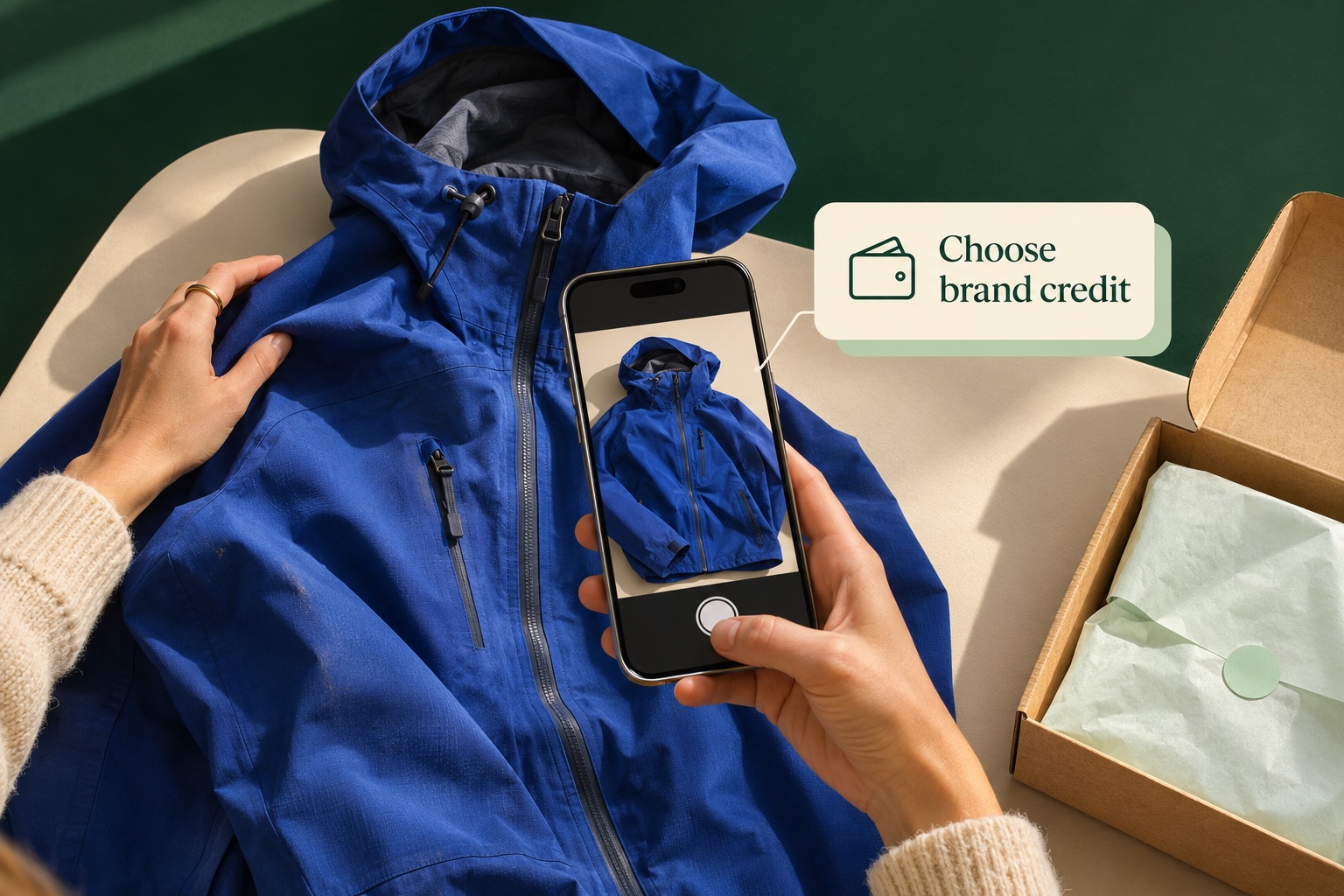
Store credit is one practical connection. On Marimekko Pre-Loved, sellers can choose a Marimekko gift card instead of cash. That gift card can be used in eligible Marimekko channels, including the main online shop, rather than on the Pre-Loved marketplace.
This creates an opportunity to reconnect a seller with the brand after the original purchase. Credit selection alone does not prove an additional purchase or incremental revenue. To understand the commercial effect, a brand needs to measure redemption and, where its integrations and permissions allow, the purchases that follow.
Plan marketing around both buying and selling
A resale channel needs people willing to list products as well as people willing to buy them. A campaign inviting someone to sell a piece they no longer wear has a different job from a campaign presenting a new collection.
Owning the resale experience gives a brand room to connect those messages. For example, a collection launch could also invite existing customers to list older pieces and explain the option to receive brand credit. At Resale Preloved, we have worked on campaigns with Marimekko that connect resale activity and incentives. That is a practical part of running the channel.
A marketing tool inside the resale platform could make this easier if it helps a team act on useful moments:
- Help a seller finish an incomplete listing.
- Explain the payout options when a sale is completed.
- Show buyers relevant pre-loved stock.
- Measure which campaigns lead to listings, sales and credit redemption.
Connecting resale activity to your CRM can help you make follow-up campaigns more relevant. An unfinished listing could trigger a reminder to complete it. After a sale, a seller who chooses brand credit could receive relevant suggestions from the main brand shop. With the right integrations and customer permissions, these moments can become part of your existing marketing flows, helping you continue the customer relationship beyond the original purchase.
These are examples of possible workflows. Depending on the setup, they could run through the resale platform, your existing CRM or a combination of both.
Make the economics visible
P2P can avoid collecting and storing customer inventory, but profitability still needs a plan. Platform costs, payment fees, moderation, support, incentives and marketing all need to be accounted for.
For a first launch, define what you want to learn. Can customers list successfully? Do those listings find buyers? How much support does each completed sale require? What does it cost to bring a seller or buyer back?
Keep resale transaction income separate from any measured effect on the main brand shop. A gift card payout creates a connection between the channels; it does not make the value of that connection automatic.
Give the channel an owner and a workable scorecard
A platform cannot decide which team owns resale or how much time that team can spend on it. Someone needs responsibility for the service, a budget and support from the people handling e-commerce, marketing and customer care.
The scorecard should reflect that shared work. Useful measures could include active sellers, completed sales, time to sale, support contacts per order, contribution after operating costs and credit redemption. Choose the measures that answer your business questions, then review them together.
A focused pilot can help a brand learn before expanding. Set its scope, assign the work and agree what would justify continuing or changing direction.
At Resale Preloved, we build and operate branded resale marketplaces. Our view is that the operating model, marketing and commercial ownership should be planned alongside the platform. If you are assessing a first launch, start by mapping those responsibilities. That makes the size of the task much easier to judge.
Further reading
Continue exploring
Build your resale programme.
Explore peer-to-peer resale, trade-in and brand-owned inventory, with the workflows behind each approach.
Explore resale solutions →See the platform
Your brand.
Your resale programme.
Discuss your model, your operational needs and the systems you want to connect.
Request a demo →